

The 12th International Physical Internet Conference (IPIC 2026) will take place from 8 to 10 June 2026 in Bordeaux (France), co-hosted by KEDGE Business School and IMT Mines Albi. IKIGAI, an EU-funded project driving innovation in zero-emission freight transport and logistics transformation, is glad to support and contribute to this event.
Over the years, IPIC has become the global reference point for the Physical Internet community, uniting researchers, industry leaders, policymakers and innovators committed to transforming logistics and supply chains into open, efficient, and interconnected systems. The 2026 edition will be reinforcing the urgency and ambition behind achieving global logistics decarbonisation through scalable innovation.
The Physical Internet aims to make freight flows and logistics services as seamless, open and connected as the digital internet. By enabling smart, synchromodal, multimodal, and collaborative systems, it addresses not only the climate impact of freight transport but also economic and operational inefficiencies. IPIC 2026 will demonstrate how this vision is already taking shape and where further progress is needed.
The conference will begin with a pre-conference programme in Albi on 5 and 6 June, focused on capacity-building, research training and interactive learning, including the “My Thesis in 180 Seconds” challenge and immersive sessions using serious games and virtual reality. The main conference will then be held in Bordeaux from 8 to 10 June, featuring a comprehensive programme of scientific and industrial sessions, keynotes, roundtables, exhibitions, collaborative workshops and site visits.
The central theme of IPIC 2026 “Supply Chain and Logistics Intelligence in the Era of the Physical Internet: Bridging High-Tech and Low-Tech Solutions” resonates strongly with IKIGAI’s mission to accelerate the realisation of the Physical Internet by 2040 and achieve zero-emission freight transport by 2050. The event will explore how advanced digital technologies such as artificial intelligence, digital twins and blockchain can be integrated with tangible infrastructure innovations such as reusable packaging, modularisation and collaborative logistics frameworks.
The call for contributions is now open, with abstract submissions due by 15 February 2026 and full papers, posters and innovation materials due by 1 April 2026. Accepted contributions will be published in the official proceedings, indexed and made available through the IPIC 2026 website, the ALICE Knowledge Platform, and the Georgia Tech SMARTech repository.
As IKIGAI continues to convene stakeholders across Europe and globally through the PI Ambassadors Community and beyond, IPIC 2026 represents an important moment to accelerate progress, share breakthroughs and forge the partnerships necessary to meet the climate and innovation goals of the logistics sector.
More information and submission guidelines are available at https://ipic2026.pi.events.
We invite all IKIGAI stakeholders, researchers, policymakers, startups, freight operators, infrastructure providers and technology leaders, to engage with IPIC 2026 and help shape the future of sustainable, intelligent and collaborative logistics.
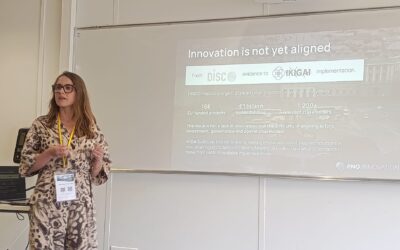
IKIGAI at IPIC 2026: Multimodal hubs, ports and deployable nodes
At IPIC 2026 in Bordeaux, the IKIGAI project showcased methodologies and tools to help scale Physical Internet innovations beyond pilot projects. Discussions highlighted the importance of interoperability, governance, stakeholder collaboration and readiness assessment to accelerate the deployment of scalable, zero-emission logistics solutions.
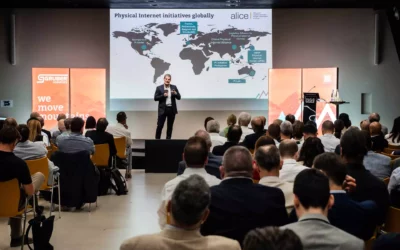
IKIGAI at Gruber Logistics Innovation Summit
At the Gruber Logistics Innovation Summit, Fernando Liesa and Sergio Barbarino highlighted the importance of collaboration in addressing the challenges facing logistics. Discussions focused on the Physical Internet, innovation deployment, automation and AI, emphasising that resilient and sustainable supply chains require not only technological advances but also stronger collaboration across organisations and stakeholders. Their contributions closely reflected the ambitions of the IKIGAI Project, which is accelerating the transition towards collaborative, interconnected and zero-emission freight transport systems.
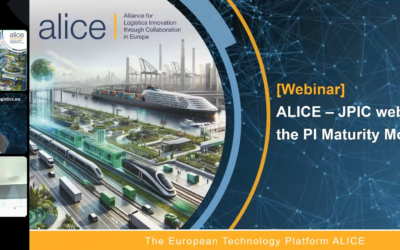
Physical Internet maturity model for corporations
The ALICE–JPIC webinar explored Japan’s Physical Internet Maturity Model (PIMM), highlighting how structured maturity frameworks, collaboration and international exchange can support scalable, interoperable and zero-emission logistics transformation.