
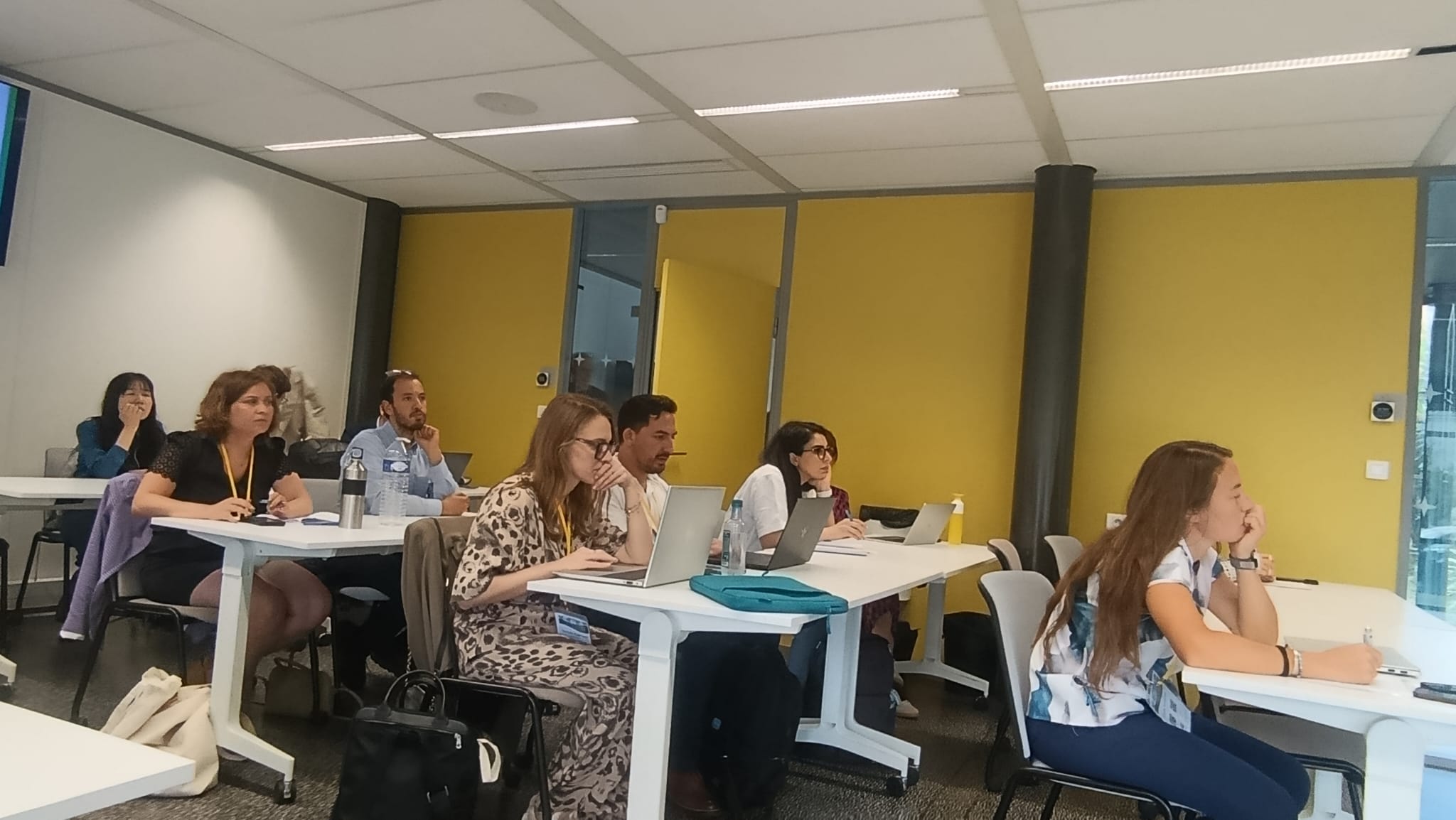
At the 12th International Physical Internet Conference (IPIC 2026) in Bordeaux, the IKIGAI project contributed to discussions on how Physical Internet-inspired logistics innovations can move beyond pilot demonstrations towards large-scale deployment.
The session “Multimodal Hubs, Ports and Deployable Nodes”, moderated by Paola Astegiano, brought together researchers and innovation projects working on decision-support tools, digital twins, network optimisation and scalable Physical Internet solutions.
A roadmap-aligned methodology for scaling logistics innovations
Paola Astegiano presented the paper “A roadmap-aligned decision-support methodology to identify scaling mechanisms for Physical Internet-compliant logistics innovations: the IKIGAI approach”, developed by the IKIGAI consortium.
The presentation addressed one of the key challenges facing logistics innovation today: how to move from successful pilots and local demonstrations towards widespread adoption and systemic transformation.
The proposed methodology provides a structured framework to identify and prioritise the actions required to scale logistics innovations while remaining aligned with both Physical Internet principles and zero-emission freight transport objectives.
The approach combines:
- Definition of target maturity profiles for logistics innovations
- Assessment of current maturity levels through structured questionnaires
- Evaluation across multiple scaling dimensions, including technology, operations, governance and regulation
- Weighted gap analysis to identify critical barriers and priorities
- Identification of scaling mechanisms linked to Physical Internet roadmaps and transition pathways
Rather than focusing solely on technology readiness, the methodology recognises that successful scaling depends on a combination of operational, organisational, governance and regulatory factors.
The methodology is currently being applied across IKIGAI’s logistics innovations and will contribute to the development of future Physical Internet implementation pathways and scaling strategies.
Assessing Physical Internet readiness through collective intelligence
The session also featured an interactive workshop led by Stefania Pesavento titled “Assessing Physical Internet Readiness – A Live Urban Logistics Ecosystem Diagnostic”.
The workshop engaged participants in a collective assessment of Physical Internet readiness across different regions, cities and logistics ecosystems. Through a live audience interaction exercise, participants explored key challenges affecting the adoption and scaling of Physical Internet solutions.
The discussion focused on three recurring themes:
- Fragmentation of stakeholder ecosystems
- Investment and financing barriers
- Governance and regulatory challenges
Participants identified several factors that will be critical for future deployment, including:
- Shared logistics infrastructure
- Data interoperability and trusted information exchange
- Governance frameworks enabling collaboration
- Regulatory support and public-sector involvement
- Increased awareness and education around Physical Internet concepts
The workshop highlighted that while innovative solutions already exist, scaling them requires stronger collaboration mechanisms and coordinated action across public and private stakeholders. Participants also stressed the importance of creating neutral environments that enable organisations to cooperate while maintaining trust and competitiveness.
From innovation to systemic transformation
Together, the presentation and workshop reflected a central objective of the IKIGAI project: helping logistics innovations progress from promising concepts and pilot demonstrations towards scalable, interoperable and widely deployable solutions.
By combining practical deployment activities with methodologies for readiness assessment, maturity evaluation and scaling support, IKIGAI aims to accelerate the transition towards greener, more collaborative and Physical Internet-compliant logistics systems.
The discussions at IPIC 2026 reinforced the importance of governance, interoperability and stakeholder engagement as essential enablers for achieving large-scale transformation in freight transport and logistics ecosystems.

Urban Living Labs and sustainable implementation at IPIC 2026
At IPIC 2026, the session “Urban Living Labs and Sustainable Implementation” showcased how projects including IKIGAI are translating Physical Internet concepts into practical urban logistics solutions through living labs, stakeholder collaboration and scalable approaches for sustainable last-mile delivery.
IKIGAI General Assembly
The IKIGAI General Assembly, held alongside IPIC 2026 in Bordeaux, brought project partners together to review progress, align upcoming activities and prepare for pilot deployment. Discussions focused on scaling logistics innovations beyond demonstrations, strengthening stakeholder engagement through the Physical Internet Ambassadors community, and supporting the transition towards more collaborative, interoperable and sustainable Physical Internet-enabled logistics networks.
IKIGAI Logistics Innovations
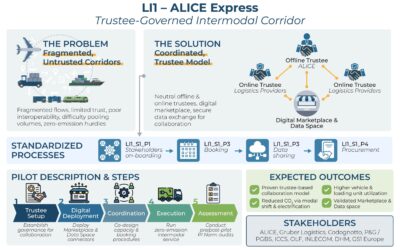
The IKIGAI project continues to advance its portfolio of logistics innovations, strengthening alignment with the Physical Internet (PI) through the development of collaborative, standardised and digitally enabled logistics systems. By bringing together industry stakeholders, governance frameworks and interoperable technologies, IKIGAI demonstrates how freight transport can evolve towards scalable, zero-emission and interconnected networks.

Project coordinator
ikigai@fitconsulting.it

This project has received funding from the European Union’s Horizon Europe research and innovation programme under grant agreement No 101202912. Views and opinions expressed are however those of the author(s) and do not necessarily reflect those of the European Union or the granting authority. Neither the European Union nor the granting authority can be held responsible