
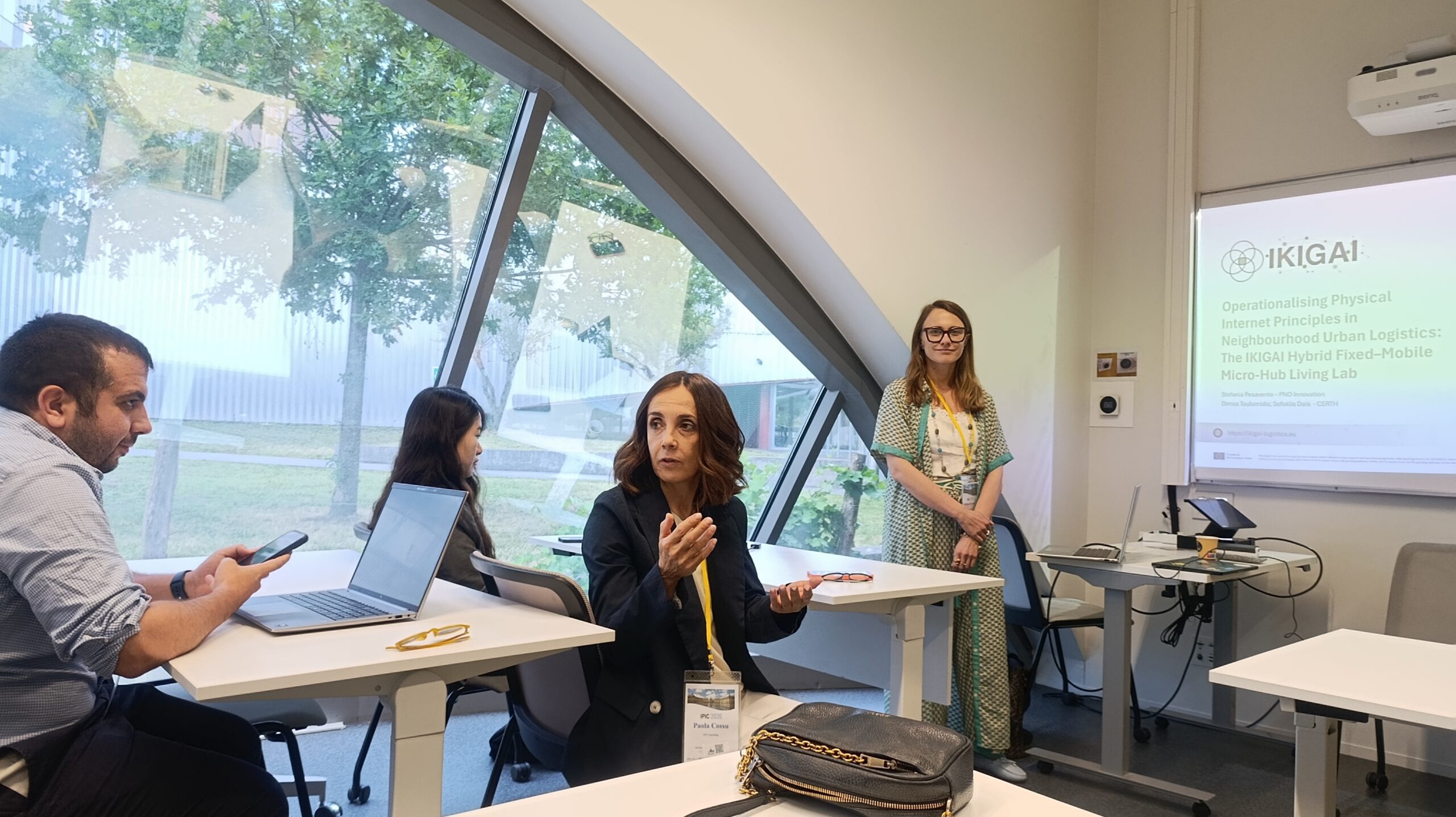
How can Physical Internet concepts be translated into practical solutions that improve everyday urban logistics?
This question was explored during the IPIC 2026 session “Urban Living Labs and Sustainable Implementation”, where researchers and practitioners presented real-world demonstrations, pilot projects and implementation frameworks designed to bring Physical Internet principles closer to large-scale deployment.
Moderated by Paola Cossu, the session highlighted a common theme: successful implementation depends not only on technology, but also on stakeholder collaboration, local engagement, governance and practical experimentation.
Living labs as a pathway to deployment
Several presentations demonstrated how living labs are becoming an important tool for testing and validating Physical Internet concepts in real operational environments.
Contributions covered urban logistics living labs, healthcare supply chains, zero-emission fleet management, neighbourhood logistics systems and governance frameworks for cross-border Physical Internet networks.
Together, the presentations illustrated how cities and local ecosystems can serve as testing grounds for innovations that may later be replicated and scaled to larger logistics networks.
IKIGAI’s hybrid fixed-mobile micro-hub living lab
One of the featured presentations focused on the IKIGAI project and its living lab in Esplugues de Llobregat, within Barcelona Metropolitan Area.
Presented by Stefania Pesavento, Senior Innovation Consultant at PNO Innovation.the work explores how Physical Internet principles can be operationalised through a hybrid network of fixed and mobile micro-hubs designed to improve urban logistics efficiency while supporting local commerce and sustainable deliveries.
The pilot addresses a common challenge faced by many cities: how to improve access to local products while reducing unnecessary transport movements and emissions.
Rather than relying exclusively on traditional home delivery models, the IKIGAI living lab combines several delivery options:
- Fixed lockers located in the local markets and the pilot neighbourhood
- Convenience collection points reached at specific times by an e-van
- Door-to-door delivery for accessibility purposes
The approach aims to provide flexibility for different user groups, including families, elderly citizens and residents with varying levels of digital literacy.
Bringing local commerce closer to citizens
A key objective of the pilot is to support local markets and retailers by making their products easier to access through digital ordering and innovative delivery solutions.
The project is working with multiple types of goods and services, including:
- Fresh food and groceries
- Bakery products
- Refrigerated goods
- Potential pharmaceutical deliveries
The living lab demonstrates how Physical Internet concepts can support more efficient local distribution networks while helping strengthen local economic activity.
Data spaces, optimisation and intelligent logistics operations
The pilot combines physical infrastructure with digital tools designed to optimise operations and support future scalability.
Several project components contribute to this objective:
- Data space technologies to enable information sharing and interoperability
- AI-based routing and inventory optimisation
- CO₂ emissions monitoring and impact assessment
- Operational dashboards supporting logistics decision-making
The living lab is designed not only as a demonstration but also as a foundation for future deployment and replication beyond the project lifetime.
Testing hybrid logistics models
An important aspect of the IKIGAI pilot is the evaluation of different logistics configurations.
The project compares:
- Traditional fragmented delivery systems
- Fixed locker-based approaches
- Hybrid systems combining fixed and mobile logistics assets
Researchers are assessing impacts on vehicle kilometres travelled, energy consumption, emissions and accessibility to determine which configurations provide the best balance between efficiency and user needs.
From experimentation to scale
The session highlighted a broader lesson shared by many of the presentations: innovation projects increasingly need to move beyond technology development and demonstrate pathways towards large-scale implementation.
For IKIGAI, the living lab in Esplugues represents an important opportunity to generate practical evidence on how Physical Internet principles can support more collaborative, sustainable and citizen-centred urban logistics systems.
As pilot activities move into implementation, the project will continue evaluating performance, stakeholder engagement and scalability, helping transform Physical Internet concepts into operational reality.
IKIGAI featured in IDSA Tech Talk on data spaces standardisation
On 10 September 2026, IKIGAI was featured during the International Data Spaces Association (IDSA) Tech Talk, “Mapping the Data Spaces Standardization Landscape – and Shaping Version 3.0”, connecting the project with the wider European and international discussion on interoperable and trusted data spaces.
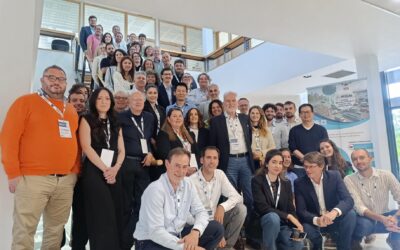
IKIGAI General Assembly
The IKIGAI General Assembly, held alongside IPIC 2026 in Bordeaux, brought project partners together to review progress, align upcoming activities and prepare for pilot deployment. Discussions focused on scaling logistics innovations beyond demonstrations, strengthening stakeholder engagement through the Physical Internet Ambassadors community, and supporting the transition towards more collaborative, interoperable and sustainable Physical Internet-enabled logistics networks.
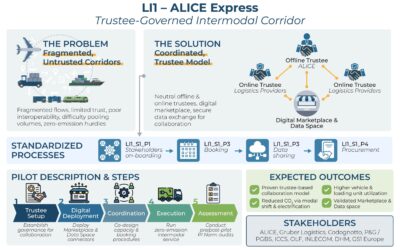
IKIGAI Logistics Innovations
The IKIGAI project continues to advance its portfolio of logistics innovations, strengthening alignment with the Physical Internet (PI) through the development of collaborative, standardised and digitally enabled logistics systems. By bringing together industry stakeholders, governance frameworks and interoperable technologies, IKIGAI demonstrates how freight transport can evolve towards scalable, zero-emission and interconnected networks.

Project coordinator
ikigai@fitconsulting.it

This project has received funding from the European Union’s Horizon Europe research and innovation programme under grant agreement No 101202912. Views and opinions expressed are however those of the author(s) and do not necessarily reflect those of the European Union or the granting authority. Neither the European Union nor the granting authority can be held responsible