

On 17 and 18 December, the IKIGAI consortium held online for its second project-wide meeting. The two-day meeting brought together a strong representation of partners from across the consortium and marked an important moment in the project’s early implementation phase. Participation levels were high throughout, and discussions were notably dynamic, constructive, and focused on delivery.
The meeting took place as IKIGAI approaches the end of its first six months, a period characterised by foundational work across the initial work packages. The consortium took the opportunity to review progress, clarify interdependencies and ensure a shared understanding of priorities for the months ahead.
Focus on coherence across Work Packages
The first day of the meeting was dedicated to a structured review of the project framework and the progress of Work Packages 1, 2, 5 and 6. Rather than revisiting the overall project description, the discussions focused on how the different work packages interact and reinforce one another.
Particular attention was given to the alignment between the first three WPs, which together form the core of IKIGAI’s knowledge base. Partners examined how the identification of barriers, enablers and scaling factors feeds into the development of the PI Rulebook, the PI Norm, and the preparation of the pilots. These exchanges helped to clarify critical milestones and highlighted the importance of close coordination in the coming months to ensure consistency across deliverables.
Time was deliberately reserved after each presentation for questions and discussion. This format encouraged active engagement and allowed partners to raise practical considerations, flag dependencies, and propose concrete follow-up actions, including targeted bilateral exchanges between Work Packages where needed.
Progress on pilots and Logistics Innovations
The second day shifted the focus towards implementation. Partners received an overview of WP3 and detailed updates on the five Logistics Innovations that will be demonstrated through the IKIGAI pilots. Each pilot was presented in terms of its objectives, scope and current state of preparation, providing a clear picture of how the pilots contribute to the overall ambition of advancing Physical Internet-compliant logistics solutions.
These sessions generated lively discussion around implementation pathways, data and process alignment, and the role of pilots in validating both the PI Norm and the impact assessment framework. The exchanges reinforced a shared understanding that the pilots are not isolated demonstrations, but a central mechanism for learning, feedback and refinement across the project.
The meeting concluded with a clear roadmap for the next phase of work, including upcoming deliverables, key milestones, and the need for continued alignment across technical, operational and strategic dimensions.
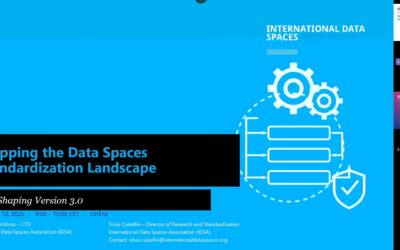
IKIGAI featured in IDSA Tech Talk on data spaces standardisation
On 10 September 2026, IKIGAI was featured during the International Data Spaces Association (IDSA) Tech Talk, “Mapping the Data Spaces Standardization Landscape – and Shaping Version 3.0”, connecting the project with the wider European and international discussion on interoperable and trusted data spaces.

Urban Living Labs and sustainable implementation at IPIC 2026
At IPIC 2026, the session “Urban Living Labs and Sustainable Implementation” showcased how projects including IKIGAI are translating Physical Internet concepts into practical urban logistics solutions through living labs, stakeholder collaboration and scalable approaches for sustainable last-mile delivery.
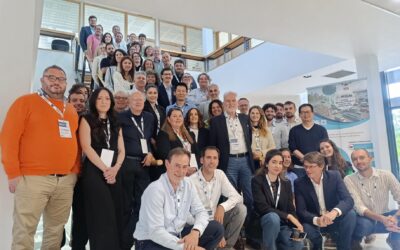
IKIGAI General Assembly
The IKIGAI General Assembly, held alongside IPIC 2026 in Bordeaux, brought project partners together to review progress, align upcoming activities and prepare for pilot deployment. Discussions focused on scaling logistics innovations beyond demonstrations, strengthening stakeholder engagement through the Physical Internet Ambassadors community, and supporting the transition towards more collaborative, interoperable and sustainable Physical Internet-enabled logistics networks.