

The ALICE-JPIC webinar on the Physical Internet Maturity Model for Corporations (PIMM) explored how structured frameworks can support companies in progressing towards Physical Internet (PI) implementation. Organised by ALICE in collaboration with the Japan Physical Internet Center, the session highlighted the complementarity between Japanese and European approaches to logistics transformation.
The discussion also connected to the Horizon Europe IKIGAI project, which focuses on scaling up Physical Internet innovations and accelerating the transition towards zero-emission and collaborative freight transport.
Opening the session, Fernando Liesa emphasised the strong alignment between Europe and Japan in addressing current logistics challenges. Both regions face increasing pressure from driver shortages, low asset utilisation and fragmented supply chain systems. In this context, the Physical Internet is emerging as a practical framework to improve efficiency, enable collaboration and support sustainability objectives.
He highlighted that the collaboration between ALICE and JPIC, supported by IKIGAI, aims to strengthen international exchange and accelerate deployment. While Japan is advancing through policy-driven implementation and company-level maturity frameworks, Europe is focusing on innovation scale-up, including solutions such as smart containers, digital tools and collaborative platforms. These approaches are complementary and together contribute to a broader global transition.
From roadmap to implementation: the role of PIMM
The development of PIMM responds to a concrete need identified in Japan. Following the publication of the national Physical Internet roadmap in 2022, companies began engaging in collaborative initiatives across sectors. However, many lacked a clear method to assess their progress or identify next steps.
At the same time, structural inefficiencies remain significant. Truck fill rates in Japan are estimated at around 40%, while driver time is often lost in waiting and handling operations. Combined with regulatory constraints on working hours, this creates an urgent need for more efficient and collaborative logistics systems.
PIMM was therefore designed as a practical tool to guide companies in their transition. It provides a structured way to assess maturity, benchmark performance and support continuous improvement, while also enabling companies to identify trusted collaboration partners.
A structured framework for collaborative logistics
A key feature of PIMM is its focus on real, multi-company logistics operations rather than individual organisations. The model evaluates ongoing collaborative projects that have been operational for at least one year, ensuring that assessments reflect practical implementation rather than theoretical strategies.
The framework is built around five dimensions: physical space, business processes, digitalisation, ecosystem and human resource development. Together, these dimensions capture the key elements required to enable Physical Internet systems, from shared assets and synchronised operations to governance structures and skills development.
Each dimension is assessed across five maturity levels, creating a detailed evaluation matrix. The model uses milestone-based criteria to describe how collaboration evolves, from initial internal practices to fully interoperable, cross-industry systems. For example, digitalisation progresses from manual processes to advanced data-driven optimisation, including the use of artificial intelligence to support decision-making.
Importantly, the model provides both an overall maturity score and a multi-dimensional profile. This allows companies to understand their specific strengths and identify targeted areas for improvement. The assessment process is based on evidence from real operations and includes expert review to ensure consistency and reliability.
Feedback and discussion with participants
Initial trials with companies in Japan confirmed the practical value of the model. Participants highlighted its usefulness not only for assessing progress but also for identifying future collaboration opportunities. This reinforces the importance of trust and shared frameworks in enabling Physical Internet ecosystems.
During the discussion, participants raised questions about how Japan established the evaluation structure behind the PI maturity model, particularly given the absence of comparable frameworks in Europe. The exchange highlighted broader interest in how structured maturity approaches could support future collaboration and implementation initiatives beyond Japan.
From an IKIGAI perspective, PIMM complements ongoing efforts to scale up innovation. While IKIGAI focuses on demonstrating and deploying solutions such as collaborative services, digital platforms and emission visibility tools, PIMM provides a structured approach to assessing operational maturity. Together, these perspectives support companies, innovators and policymakers in advancing towards interconnected and zero-emission logistics systems.
Conclusion
The webinar highlighted the importance of combining strategic vision with practical implementation tools. The Physical Internet Maturity Model offers a structured pathway for companies to move from fragmented operations towards collaborative and standardised logistics networks.
It also demonstrated the value of international collaboration. By aligning European and Japanese approaches, stakeholders can accelerate the transition towards a more efficient, sustainable and globally connected logistics system.
The webinar also served as a stepping stone toward further exchange, with participants invited to continue the discussion at the upcoming International Physical Internet Conference (IPIC 2026) in Bordeaux. More information: https://ipic2026.pi.events/
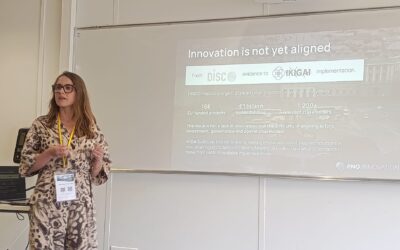
IKIGAI at IPIC 2026: Multimodal hubs, ports and deployable nodes
At IPIC 2026 in Bordeaux, the IKIGAI project showcased methodologies and tools to help scale Physical Internet innovations beyond pilot projects. Discussions highlighted the importance of interoperability, governance, stakeholder collaboration and readiness assessment to accelerate the deployment of scalable, zero-emission logistics solutions.
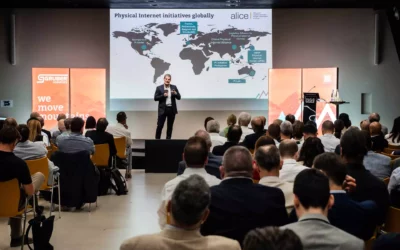
IKIGAI at Gruber Logistics Innovation Summit
At the Gruber Logistics Innovation Summit, Fernando Liesa and Sergio Barbarino highlighted the importance of collaboration in addressing the challenges facing logistics. Discussions focused on the Physical Internet, innovation deployment, automation and AI, emphasising that resilient and sustainable supply chains require not only technological advances but also stronger collaboration across organisations and stakeholders. Their contributions closely reflected the ambitions of the IKIGAI Project, which is accelerating the transition towards collaborative, interconnected and zero-emission freight transport systems.
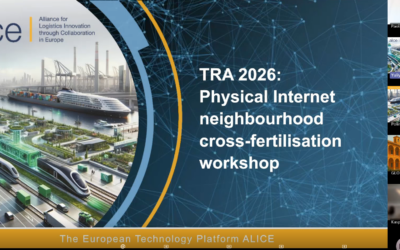
Physical Internet neighbourhood cross-fertilisation workshop for TRA 2026
ALICE brought together IKIGAI, HOLOGISTICS, PILOTS, BRIDGE and SARIL to strengthen collaboration ahead of TRA 2026. The workshop explored synergies across complementary projects advancing the Physical Internet through interoperability, digitalisation, resilience and collaborative logistics solutions.

Project coordinator
ikigai@fitconsulting.it

This project has received funding from the European Union’s Horizon Europe research and innovation programme under grant agreement No 101202912. Views and opinions expressed are however those of the author(s) and do not necessarily reflect those of the European Union or the granting authority. Neither the European Union nor the granting authority can be held responsible