
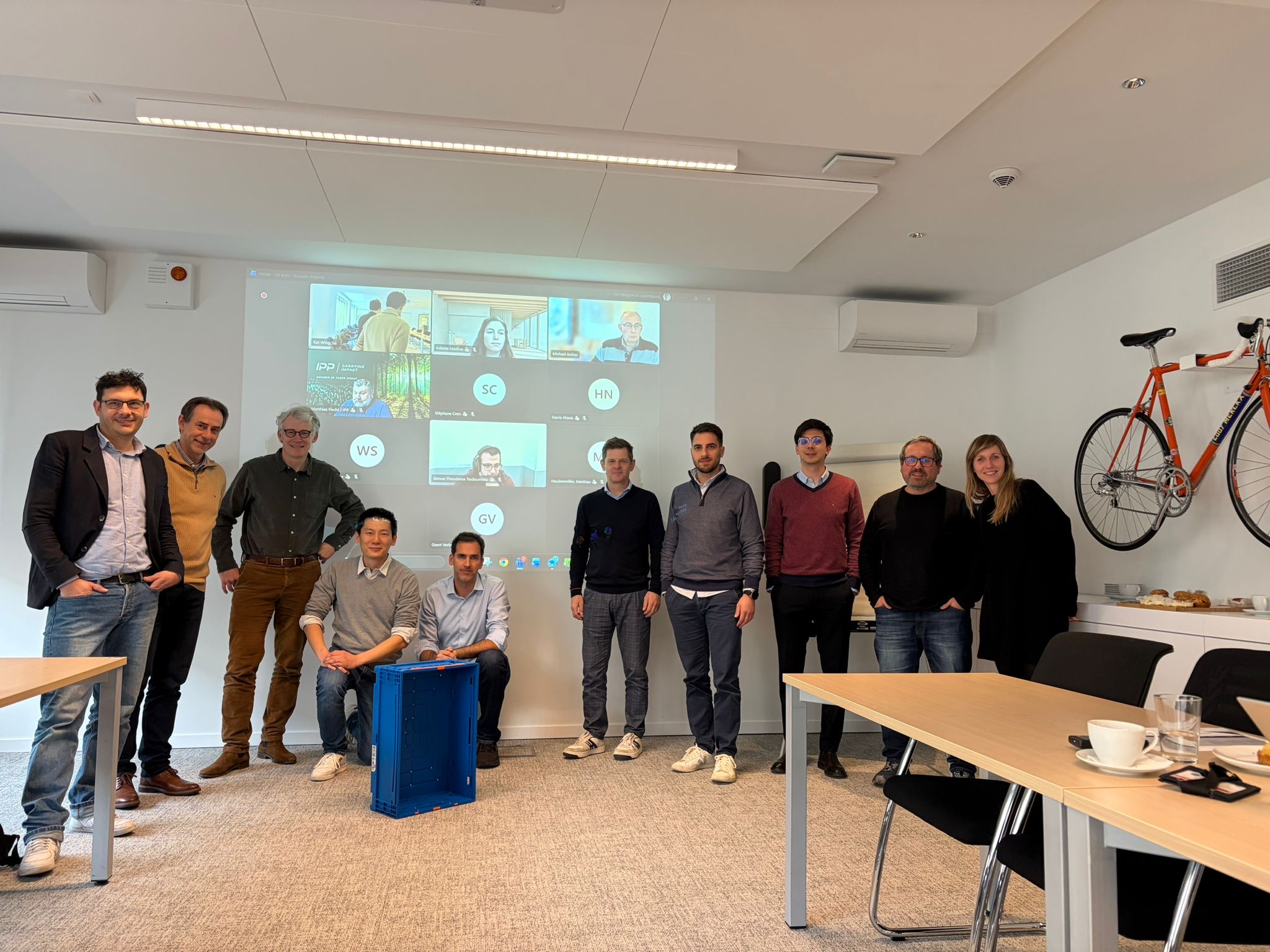
On 13 January 2026, the IKIGAI Project held the hybrid kick-off meeting of Logistics Innovation 5 (LI5) “GS1 SMART-Box pooling governance scaling up to Belgium and France” in Brussels and online. The event was hosted by GS1 Europe. LI5 addresses the specific business challenge of deploying reusable, standardised modular boxes on a large scale through open, economically viable pooling models.
Advancing reusable and standardised logistics assets
Key topics discussed
-
Real-world use cases, covering automated distribution centres, shelf-ready packaging, display logistics and home delivery
-
Pooling and governance models, addressing ownership, cost allocation, clearing mechanisms and scalability
-
Digital enablers, such as event tracking, smart contracts and digital twins, to support traceability, transparency and operational efficiency
Building the foundation for pilot execution
IKIGAI Logistics Innovations
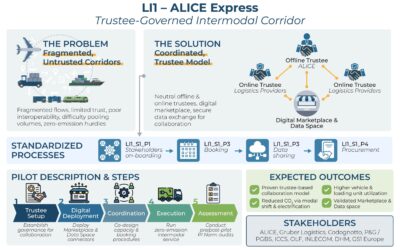
The IKIGAI project continues to advance its portfolio of logistics innovations, strengthening alignment with the Physical Internet (PI) through the development of collaborative, standardised and digitally enabled logistics systems. By bringing together industry stakeholders, governance frameworks and interoperable technologies, IKIGAI demonstrates how freight transport can evolve towards scalable, zero-emission and interconnected networks.
IKIGAI at IPIC 2026: Multimodal hubs, ports and deployable nodes
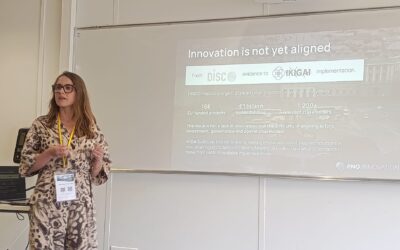
At IPIC 2026 in Bordeaux, the IKIGAI project showcased methodologies and tools to help scale Physical Internet innovations beyond pilot projects. Discussions highlighted the importance of interoperability, governance, stakeholder collaboration and readiness assessment to accelerate the deployment of scalable, zero-emission logistics solutions.
IKIGAI at Gruber Logistics Innovation Summit
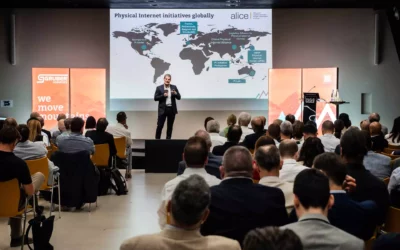
At the Gruber Logistics Innovation Summit, Fernando Liesa and Sergio Barbarino highlighted the importance of collaboration in addressing the challenges facing logistics. Discussions focused on the Physical Internet, innovation deployment, automation and AI, emphasising that resilient and sustainable supply chains require not only technological advances but also stronger collaboration across organisations and stakeholders. Their contributions closely reflected the ambitions of the IKIGAI Project, which is accelerating the transition towards collaborative, interconnected and zero-emission freight transport systems.