

As part of this effort, IKIGAI has contributed to a new white paper led by Smart Freight Centre, with input from Procter & Gamble, Normec Verifavia, and GRUBER Logistics. The paper addresses the practical implementation of book and claim models for low-emission road freight, offering a structured approach for shippers to overcome data and supply constraints when working with carriers of varying maturity.
The white paper forms part of IKIGAI’s broader ambition to enable credible, standardised, and verifiable emissions reporting – a foundational step toward achieving zero-emission, scalable, and collaborative freight systems in line with the Physical Internet vision by 2040.
The challenge: demand for low-emission freight is growing, but delivery falls short
Road freight contributes nearly two-thirds of global freight-related greenhouse gas (GHG) emissions. Yet, many carriers, especially smaller ones, lack the infrastructure, knowledge, or access to low-emission solutions required to meet the growing demand from shippers with climate targets.
This creates what SFC calls the “upstream partner problem”: shippers willing to decarbonise are often limited by the capabilities of their carriers.
The solution: book and claim, verified by a clear standard
The book and claim chain of custody model allows shippers to purchase the environmental attributes of low-emission transport, such as biofuel usage, even when physical delivery is not directly possible. This helps scale demand and incentivises fuel switching in the wider market.
To ensure credibility, the white paper presents a robust framework for implementation, built on:
- P&G’s standard operating procedure (SOP) for procuring and reporting low-emission road transport.
- Third-party verification from Normec Verifavia, aligned with Smart Freight Centre’s Market-Based Measures Specification (MBM Specification).
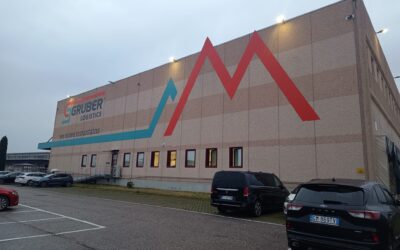
- Carrier insights, including a case study from GRUBER Logistics on implementing book and claim in practice.
Together, these tools ensure transparency, traceability, and accountability across the emissions reporting chain.
A blueprint for collaboration
The white paper outlines a replicable approach for other shippers, particularly those operating in data-poor or decentralised logistics environments. Key lessons include:
- Standardisation fosters inclusion: With clear SOPs, even less mature carriers can participate, as long as they meet minimum assurance criteria.
- Verification safeguards trust: Independent assessment is essential for ensuring claims are credible, compliant, and auditable.
- Real-world impact is achievable: GRUBER Logistics’ approach shows how even medium-sized carriers can provide reliable, low-emission services through a structured book and claim system.
IKIGAI’s role: scaling impact through shared innovation
This work aligns with IKIGAI’s mission to accelerate the Physical Internet (PI) and decarbonise freight transport through practical, industry-led solutions. By harmonising standards, enabling transparency, and fostering collaboration between shippers, carriers, and verifiers, initiatives like this are critical to unlocking real progress.
The lessons from this publication also feed directly into IKIGAI’s ambition to set new benchmarks for emissions reporting and enable greater participation in collaborative, zero-emission freight solutions – such as the digital chain of custody, being piloted by GRUBER Logistics under IKIGAI.
Read the full white paper
📄 Download here: https://smart-freight-centre-media.s3.amazonaws.com/documents/Empowering_Shippers_White_Paper_December_2025_.pdf
IKIGAI Task 3.5 Kick-off Meeting (KoM) workshop
Book & Claim is emerging as a key near-term solution for road freight decarbonisation, enabling credible biofuel claims across complex supply chains where electrification is not yet scalable, provided robust governance, verification and interoperability are ensured.

IKIGAI consortium meets online
The IKIGAI consortium held its second project-wide meeting, reviewing early progress, aligning work packages, and advancing pilot planning. Discussions were focused and constructive, reinforcing coordination and setting a clear roadmap for the next phase.

Save the date: IPIC 2026 – a milestone for the future of the Physical Internet
IPIC 2026 will bring the global Physical Internet community to Bordeaux and Albi to explore how high-tech and low-tech solutions can jointly accelerate intelligent, collaborative and zero-emission logistics.