
Why Is the project titled IKIGAI?
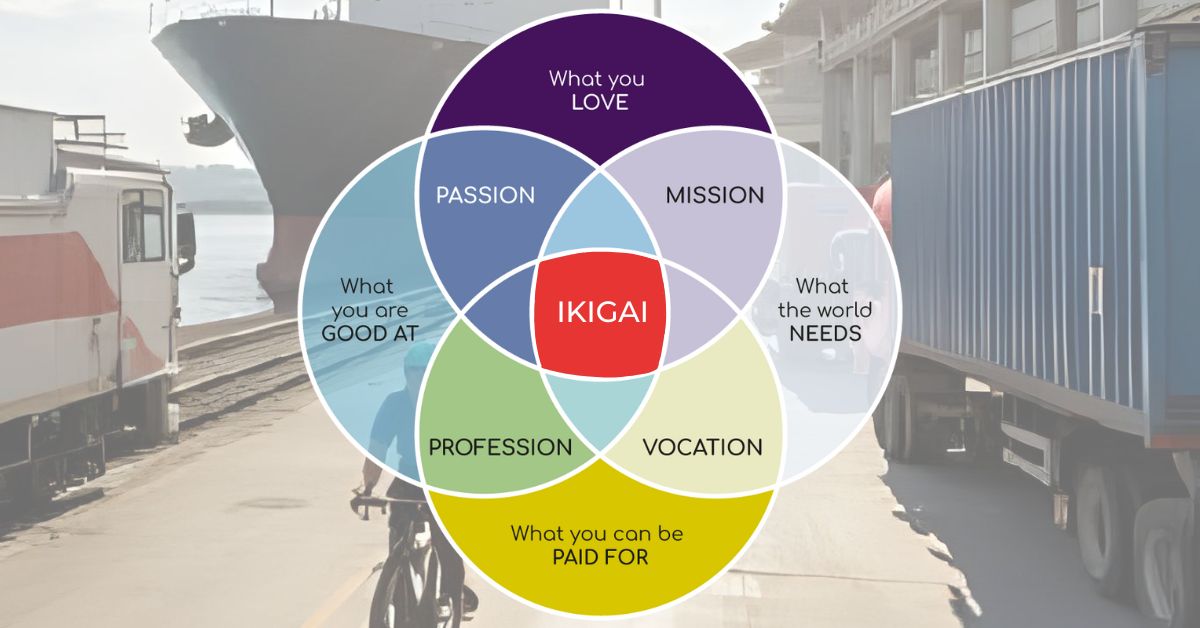
In Japanese, ikigai means “a reason for being” – the point where what we love, what the world needs, what we are good at, and what we are paid for intersect. This concept is not just a name; it is the foundation of the IKIGAI Project’s purpose and vision.
IKIGAI represents a deeply held belief that the Physical Internet (PI) is essential to the future of logistics. It is not simply a technological evolution, but a systemic transformation that enables open, sustainable, and collaborative supply chains. The name reflects our conviction that meaningful innovation must align with both purpose and impact.
We chose the title IKIGAI because:
-
- We believe in the mission. Transforming freight transport is not optional – it is imperative.
- The transition is urgently needed. The logistics sector must address environmental and societal pressures through bold innovation.
- We have the expertise to deliver. IKIGAI brings together leading researchers, industry practitioners, and technology pioneers.
- We are trusted to act. Supported by the European Commission and industry partners, IKIGAI is built to deliver tangible, scalable outcomes.
As Sergio Barbarino noted, “Innovation without scale has no real value.” IKIGAI aims to ensure that promising innovations are not just tested – they are adopted, scaled, and impactful. Our work supports solutions that deliver economic, environmental, and social value.
These include breakthrough initiatives such as the ALICE Express collaborative intermodal corridor, the GS1 Smart Box for reusable packaging, digital chain of custody tools for carbon visibility, and platforms that enable SMEs to comply with electronic Freight Transport Information (eFTI) requirements.
Through the Nishida Circle, IKIGAI is also uniting global leaders to accelerate the vision of a fully interconnected, zero-emission freight network.
Ultimately, IKIGAI is our reason for acting – a commitment to purposeful logistics innovation that meets the needs of the world while delivering measurable value. It is about driving transformation, at scale, with intent.
Let us build what matters. Let us scale what works.
Beyond cleaner vehicles: Rethinking how European freight transport works
Reducing freight transport emissions is not only about switching to cleaner vehicles. It also requires a fundamental change in how goods move across Europe, how transport capacity is used and how logistics networks interact. Better planning, more efficient use of resources and greater connectivity between transport services can all contribute to making European freight transport more sustainable.

IKIGAI in the spotlight at Trimble Insight Europe
In an interview with Italian transport publication Uomini e Trasporti, Condotta discussed the growing role of digitalisation and AI in transport planning, alongside the importance of reliable data across increasingly complex logistics chains.
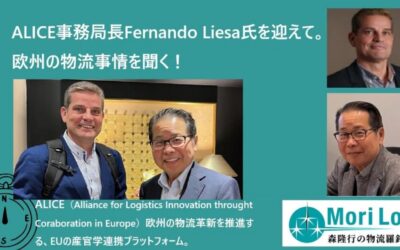
From roadmaps to implementation: What Europe and Japan can learn from each other on the Physical Internet
Europe and Japan share significant logistics challenges, from driver shortages and transport capacity constraints to decarbonisation. In a conversation on Professor Takayuki Mori’s YouTube channel, Physical Internet (PI) Ambassadors Fernando Liesa and Professor Mori discussed how the two regions are approaching these challenges and what is needed to turn the Physical Internet vision into practical logistics solutions.