

How can Europe make better use of the transport capacity it already has? And how can artificial intelligence, better data sharing and collaboration help logistics networks work as a more connected system? These questions were at the heart of insights shared by Andrea Condotta, Director of Public Affairs, Innovation & Sustainability at GRUBER Logistics and ALICE Chair, during Trimble Insight Europe, held in Brussels on 22-23 September 2026.
In an interview with Italian transport publication Uomini e Trasporti, Condotta discussed the growing role of digitalisation and AI in transport planning, alongside the importance of reliable data across increasingly complex logistics chains. For IKIGAI, these questions are particularly relevant. The project is working to advance the implementation of the Physical Internet, where logistics networks, resources and transport capacity can be connected and coordinated more effectively across companies and transport modes.
Making better use of existing transport capacity
Transport operators already manage large amounts of information covering vehicles, carriers, routes, shipments and infrastructure capacity. The challenge is turning this information into coordinated decisions. AI could increasingly support this process by analysing operational data, identifying alternatives and helping planners make better use of available resources.
Condotta illustrated this through GRUBER Logistics’ intermodal operations along the Brenner corridor, where the company carries out approximately 20,000 intermodal transport movements every year. An intelligent planning system could identify, for example, a spot road shipment that could instead be moved by rail by matching the transport request with available railway capacity in real time.
This example reflects one of the fundamental ideas behind the Physical Internet: moving beyond the optimisation of individual vehicles, companies or transport operations towards a wider network in which resources and capacity can be identified, connected and used more efficiently. This is also central to IKIGAI’s ambition to enable greater interoperability, collaboration and intelligent decision-making across logistics networks.
Trust and interoperability as foundations for collaboration
The interview also highlighted the importance of trusted information when several organisations work together. This emerged particularly in the discussion around alternative fuels such as HVO and BioLNG, where GRUBER Logistics is working to improve traceability and certification across transport chains involving carriers, freight forwarders, shippers and subcontractors.
While this work is not a specific IKIGAI project activity, it illustrates a challenge that is highly relevant to the Physical Internet. Sharing capacity and coordinating operations across organisations requires more than simply exchanging data. Participants need interoperable systems, common approaches and confidence that the information being shared is reliable and traceable.
Condotta made a similar point when discussing blockchain: technology can protect information from being modified, but it cannot guarantee that incorrect information was not entered in the first place. Reliable processes and trustworthy data therefore need to come first.
Bringing the Physical Internet closer to implementation
The examples shared at Trimble Insight Europe show that the transition towards the Physical Internet is not simply a technological challenge. AI can help operators make better decisions and digital platforms can connect information, but their real value comes when different organisations can use them to coordinate resources across a wider logistics network.
This is where IKIGAI comes in. The project is exploring how Physical Internet principles can be translated into practical logistics solutions by connecting stakeholders, transport modes, infrastructure and digital systems more effectively. As European freight transport faces growing pressure to improve efficiency, reduce emissions and address capacity constraints, better use of existing resources will become increasingly important.
Through its research, innovation and demonstration activities, IKIGAI is helping move the Physical Internet from vision towards practical implementation, supporting more interconnected, efficient and sustainable European logistics networks.
Read the full interview: Gruber Logistics, l’HVO? «Non basta dichiararlo, bisogna certificare tutta la catena» – Uomini e Trasporti
The discussion provides an opportunity to examine a central question for logistics operators, researchers and policymakers: how can organisations move from recognising the need for change to implementing collaborative, interconnected logistics operations?
Shared challenges require coordinated solutions
In an interview with Italian transport publication Uomini e Trasporti, Condotta discussed the growing role of digitalisation and AI in transport planning, alongside the importance of reliable data across increasingly complex logistics chains. For IKIGAI, these questions are particularly relevant. The project is working to advance the implementation of the Physical Internet, where logistics networks, resources and transport capacity can be connected and coordinated more effectively across companies and transport modes.
Making better use of existing transport capacity
Shared
Transport operators already manage large amounts of information covering vehicles, carriers, routes, shipments and infrastructure capacity. The challenge is turning this information into coordinated decisions. AI could increasingly support this process by analysing operational data, identifying alternatives and helping planners make better use of available resources.
Condotta illustrated this through GRUBER Logistics’ intermodal operations along the Brenner corridor, where the company carries out approximately 20,000 intermodal transport movements every year. An intelligent planning system could identify, for example, a spot road shipment that could instead be moved by rail by matching the transport request with available railway capacity in real time.
This example reflects one of the fundamental ideas behind the Physical Internet: moving beyond the optimisation of individual vehicles, companies or transport operations towards a wider network in which resources and capacity can be identified, connected and used more efficiently. This is also central to IKIGAI’s ambition to enable greater interoperability, collaboration and intelligent decision-making across logistics networks.
Trust and interoperability as foundations for collaboration
The interview also highlighted the importance of trusted information when several organisations work together. This emerged particularly in the discussion around alternative fuels such as HVO and BioLNG, where GRUBER Logistics is working to improve traceability and certification across transport chains involving carriers, freight forwarders, shippers and subcontractors.
While this work is not a specific IKIGAI project activity, it illustrates a challenge that is highly relevant to the Physical Internet. Sharing capacity and coordinating operations across organisations requires more than simply exchanging data. Participants need interoperable systems, common approaches and confidence that the information being shared is reliable and traceable.
Condotta made a similar point when discussing blockchain: technology can protect information from being modified, but it cannot guarantee that incorrect information was not entered in the first place. Reliable processes and trustworthy data therefore need to come first.
Bringing the Physical Internet closer to implementation
The examples shared at Trimble Insight Europe show that the transition towards the Physical Internet is not simply a technological challenge. AI can help operators make better decisions and digital platforms can connect information, but their real value comes when different organisations can use them to coordinate resources across a wider logistics network.
This is where IKIGAI comes in. The project is exploring how Physical Internet principles can be translated into practical logistics solutions by connecting stakeholders, transport modes, infrastructure and digital systems more effectively. As European freight transport faces growing pressure to improve efficiency, reduce emissions and address capacity constraints, better use of existing resources will become increasingly important.
Through its research, innovation and demonstration activities, IKIGAI is helping move the Physical Internet from vision towards practical implementation, supporting more interconnected, efficient and sustainable European logistics networks.
Read the full interview: Gruber Logistics, l’HVO? «Non basta dichiararlo, bisogna certificare tutta la catena» – Uomini e Trasporti
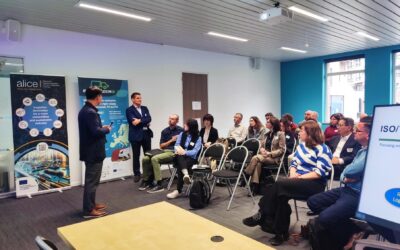
Key takeaways from the International Expert workshop
An international expert workshop gathered researchers, industry stakeholders and standardisation experts to explore how innovation pilots and emerging logistics solutions can scale into interoperable Physical Internet systems supporting efficient, collaborative and zero-emission logistics networks.
IKIGAI and partners publish white paper on book and claim
IKIGAI contributed to a Smart Freight Centre-led white paper on implementing book and claim for low-emission road freight. With input from P&G, Normec Verifavia and GRUBER Logistics, it provides a verified, standardised framework enabling credible, scalable emissions reporting.
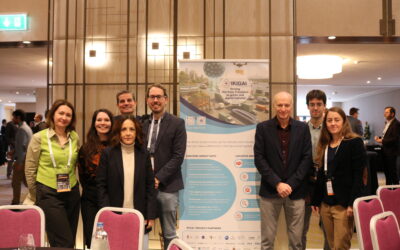
IKIGAI at the ALICE Brokerage Event 2026
IKIGAI participated in the ALICE Brokerage Event 2026 in Brussels, strengthening collaboration across Europe’s logistics ecosystem. Recognised during the General Assembly as a strategic milestone, IKIGAI advances Physical Internet governance and supports scalable, zero-emission freight innovation aligned with Horizon Europe 2026-2027 ambitions.

Project coordinator
ikigai@fitconsulting.it

This project has received funding from the European Union’s Horizon Europe research and innovation programme under grant agreement No 101202912. Views and opinions expressed are however those of the author(s) and do not necessarily reflect those of the European Union or the granting authority. Neither the European Union nor the granting authority can be held responsible