
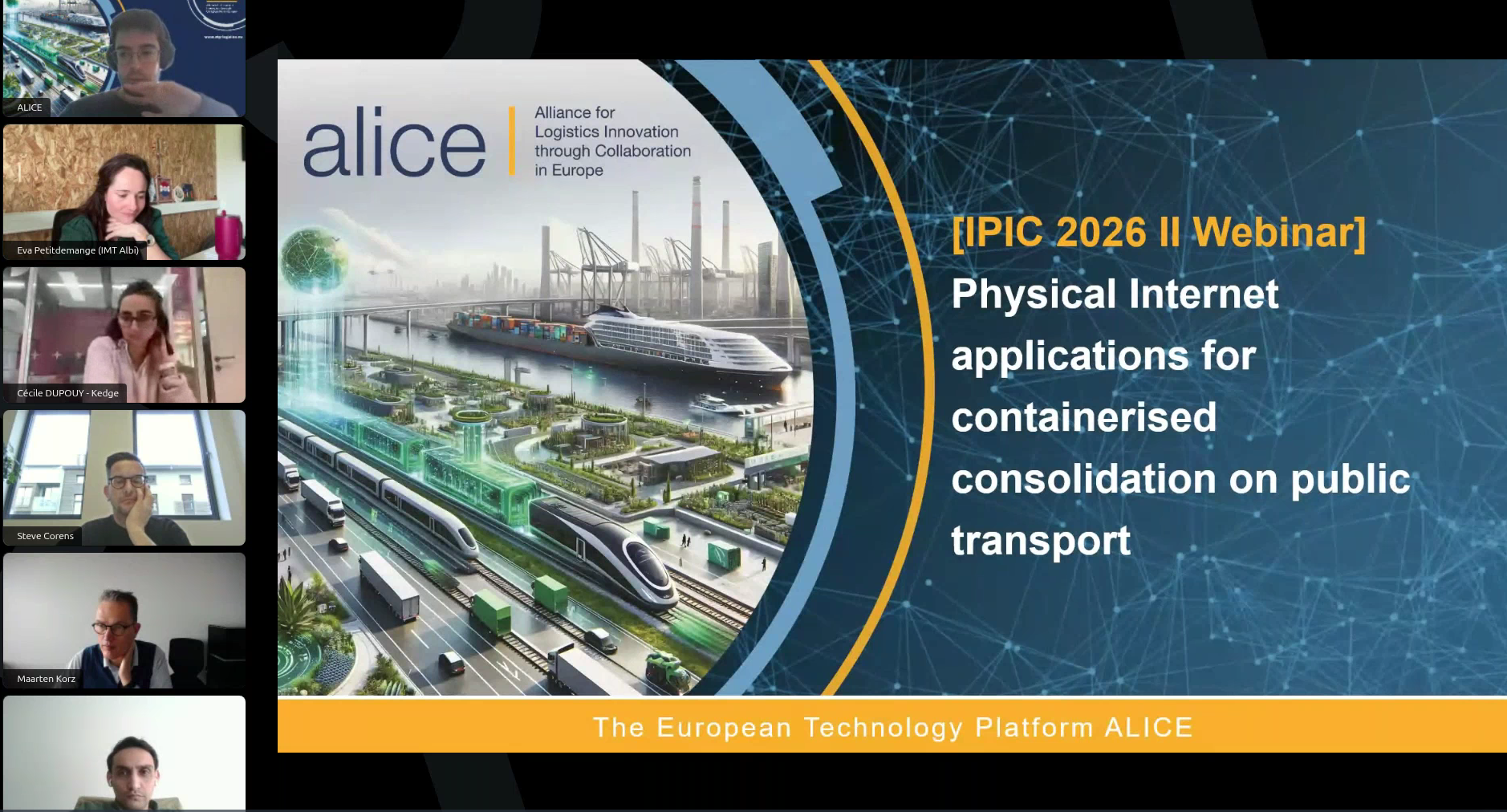
IKIGAI, together with ALICE (Alliance for Logistics Innovation through Collaboration in Europe), DISCO, Shift2Zero and URBANE, co-organised a webinar with KEDGE Business School and IMT Mines Albi to explore how Physical Internet (PI) principles can unlock the potential of public transport systems for freight movement.
This webinar, part of the road to the 12th International Physical Internet Conference (IPIC 2026), focused on how integrating freight into passenger transport networks can improve logistics performance in both urban and rural contexts while reducing emissions.
Addressing structural challenges in urban and rural logistics
Urban and rural logistics systems face fundamentally different, yet equally complex, challenges. Cities are characterised by congestion, limited space and increasing demand for rapid deliveries. In contrast, rural areas struggle with low demand density, long distances and limited-service availability.
The webinar highlighted that, despite these differences, both contexts suffer from underutilised transport capacity and fragmented logistics operations. The Physical Internet provides a unifying framework to address these inefficiencies through modularity, interoperability, and network optimisation, enabling better use of existing infrastructure.
Containerised consolidation in urban public transport
One of the central topics was the integration of freight into urban public transport systems through containerised consolidation. Research presented by Cécile Dupouy (KEDGE Business School / University of Bordeaux) demonstrated how goods can be grouped into standardised containers and transported via existing public transport networks.
Using Bordeaux as a case study, the research showed that:
- Public transport systems could handle up to 61% of daily parcel deliveries, with peaks reaching 87% during off-peak passenger periods
- Container utilisation rates reached 65-70%, indicating efficient consolidation
- Capacity availability remains the primary constraint for scaling such solutions
By leveraging high-capacity, well-structured urban transport networks, this approach enables more efficient middle-mile logistics while reducing congestion and emissions. It also illustrates how orchestrated, multimodal systems, involving logistics providers, transport operators and a coordinating entity, are essential to ensure synchronised and optimised flows.
Passenger-freight integration in rural areas
The webinar also explored how Physical Internet principles can address structural inefficiencies in rural transport systems. Eva Petitdemange (IMT Mines Albi) highlighted that rural networks often operate below capacity, around 20% for passenger transport and 30% for freight, yet remain disconnected.
The integration of passenger and freight flows offers a pathway to improve service viability and resilience through:
- Flow aggregation and mutualisation
- Modular and relay-based logistics operations
- Dynamic allocation of resources
- Shared governance and interoperability across stakeholders
Use cases such as the Ecotrain initiative in rural France demonstrate how combining passenger and freight services, supported by simulation and demand modelling, can revitalise underused infrastructure and break the cycle of low demand and limited-service provision.
From research to real-world implementation
Across both urban and rural contexts, the webinar emphasised that technical feasibility is increasingly supported by research and pilot projects. However, scaling these solutions requires addressing key operational and organisational challenges, including:
- Capacity management within existing transport systems
- Data availability and digital coordination
- Standardisation and interoperability
- Governance models and cost-sharing mechanisms
The discussions reinforced that collaboration between industry, research and policymakers is essential to move from experimentation to deployment.
Contributing to the Physical Internet vision
This webinar clearly demonstrated how Physical Internet concepts are being translated into practical, real-world applications. By enabling the integration of freight into public transport systems, these approaches contribute directly to the transition towards more sustainable, efficient and resilient logistics networks.
For IKIGAI, these insights align closely with the project’s ambition to accelerate the implementation of the Physical Internet and support the transition towards zero-emission freight transport. They also reinforce the importance of collaborative innovation, one of the core pillars of IKIGAI’s activities.
As momentum builds towards IPIC 2026, these research-driven initiatives provide valuable evidence of how PI principles can deliver tangible impact across diverse logistics contexts, bringing Europe closer to a decarbonised and interconnected logistics system.

Season’s Greetings from the IKIGAI project!
As 2025 draws to a close, the IKIGAI project reflects on a year of collaboration and looks ahead to 2026, focused on advancing practical standards, real-world pilots and progress towards zero-emission, Physical Internet-enabled freight transport.
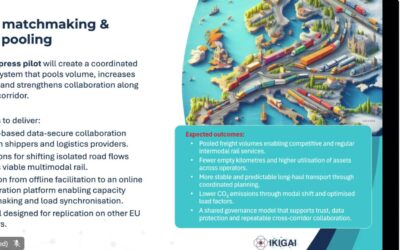
Launching the Physical Internet Ambassadors Community
The IKIGAI project launched the Physical Internet (PI) Ambassadors Community, a key step forward in our mission to enable open, collaborative, and zero-emission freight transport systems.
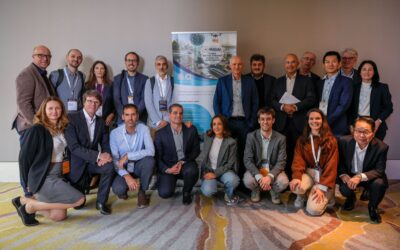
Participation of the IKIGAI project at the ALICE Logistics Innovation Summit
The IKIGAI project took part at the Logistics Innovation Summit 2025, held on 23-24 October at the Tangla Hotel in Brussels. Through its participation, IKIGAI underscored its mission to accelerate the adoption of the Physical Internet (PI) by 2040 and support the European Green Deal objectives.

Project coordinator
ikigai@fitconsulting.it

This project has received funding from the European Union’s Horizon Europe research and innovation programme under grant agreement No 101202912. Views and opinions expressed are however those of the author(s) and do not necessarily reflect those of the European Union or the granting authority. Neither the European Union nor the granting authority can be held responsible