

The transition toward a Physical Internet (PI)-enabled logistics system is gaining momentum worldwide. Across regions, governments, industry, and research organisations are developing frameworks and tools to support the large-scale adoption of collaborative, interoperable and sustainable logistics networks.
Within this global landscape, IKIGAI plays an important role in translating strategic vision into practical implementation. As a European Union-funded project closely connected to the Alliance for Logistics Innovation through Collaboration in Europe (ALICE), IKIGAI supports the implementation of the ALICE Physical Internet Roadmap through innovation, piloting and international cooperation.
By building bridges between research, industry and policymakers, IKIGAI contributes to ensuring that European innovation efforts remain aligned with global developments while also bringing practical experience back to the international Physical Internet community.
Connecting global Physical Internet initiatives
Over recent years, ALICE has increasingly positioned itself as a global connector of Physical Internet initiatives, collaborating with leading actors across Europe, Japan, Korea, China, the Philippines, Australia and the United States.
Through this network, IKIGAI strengthens links with regional Physical Internet centres, academic institutions, industry leaders and public authorities, helping to align research and innovation activities with international developments.
This global collaboration is essential because different regions are advancing Physical Internet adoption through distinct but complementary approaches that reflect their institutional and market contexts.
In the Asia-Pacific region, including the Philippines and Australia, work has focused primarily on country-level readiness frameworks. These initiatives address policy alignment, governance structures, national capacity building and long-term deployment strategies for the Physical Internet. They are often developed through national symposia, research programmes and collaborations between governments, academia and industry.
Organisational maturity: the Japanese Physical Internet model
In parallel, Japan has taken a different but highly complementary approach.
Through the Japan Physical Internet Center (JPIC), led by Professor Takayuki Mori, the Physical Internet Maturity Model (PIMM) has been developed as a framework to evaluate how organisations and companies are progressing toward collaborative logistics systems based on Physical Internet principles.
The model provides a structured method for organisations to assess their level of maturity and identify concrete steps for implementation. By organising progress across several maturity levels, PIMM offers companies a clear pathway from conceptual understanding to operational deployment of Physical Internet practices.
As such, the Japanese model represents an important contribution to the global Physical Internet ecosystem, offering industry a practical tool to support the transition from isolated logistics operations toward collaborative, networked supply chains.
Bridging innovation and real-world deployment
While national and organisational frameworks are essential, the success of the Physical Internet also depends on the scalability of concrete innovations.
IKIGAI addresses this challenge by focusing on how new logistics solutions move from pilots to large-scale deployment. Within the project, CERTH, together with INLECOM, FIT and ALICE, leads the work on a buyability and readiness framework that assesses whether Physical Internet-enabled innovations are ready for market adoption.
Traditional technology readiness assessments often focus only on the maturity of the technology itself. However, many innovations fail to scale not because the technology does not work, but because markets, regulations or business models are not prepared to support them.
The IKIGAI buyability framework therefore evaluates a broader set of factors to determine whether an innovation can successfully transition from research and pilot testing to real-world implementation and market uptake.
Aligning maturity across multiple levels
Rather than promoting a single universal maturity model, IKIGAI, steered by ALICE, acts as a neutral orchestrator within the global Physical Internet ecosystem.
Its role is to facilitate dialogue, alignment and mutual learning between different approaches that address maturity at different levels.
These complementary perspectives are gradually converging into a more holistic understanding of Physical Internet readiness, structured around three interconnected dimensions:
- Innovation and solution readiness, addressed through IKIGAI and CERTH’s work on buyability and scalability
- Organisational maturity, addressed through frameworks such as Japan’s Physical Internet Maturity Model
- Country-level readiness, developed through national initiatives and policy frameworks in regions such as Asia-Pacific
Aligning these dimensions is increasingly recognised as essential to unlock investment, policy support and long-term commitment to the Physical Internet vision.
A global milestone at IPIC 2026
The International Physical Internet Conference (IPIC) 2026, to be held in Bordeaux and co-hosted by ALICE member KEDGE Business School, will provide an important global forum to bring these perspectives together.
The event will serve as a convergence milestone where researchers, policymakers and industry leaders can present and compare different maturity and readiness approaches, exchange experiences and identify opportunities for collaboration.
Rather than marking a final outcome, IPIC 2026 will contribute to shaping the next phase of the Physical Internet journey. Insights from these discussions will inform the future evolution of the ALICE Physical Internet Roadmap, reinforcing Europe’s role as a global reference point while ensuring that Physical Internet solutions remain both globally relevant and locally adaptable.
Moving toward scalable Physical Internet deployment
Achieving the Physical Internet vision requires coordinated action across innovation, industry and policy. By connecting initiatives worldwide and supporting the development of practical deployment tools, IKIGAI contributes to accelerating this transition.
Through collaboration with global partners, innovation pilots and readiness frameworks, IKIGAI helps move the Physical Internet from concept to implementation, supporting the development of green, efficient and collaborative logistics networks for the future.
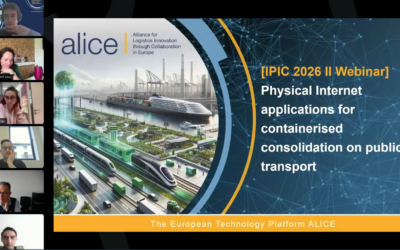
Webinar Physical Internet applications for containerised consolidation on public transport
Webinar explored Physical Internet applications for integrating freight into public transport, co-organised by IKIGAI, ALICE, DISCO, Shift2Zero and URBANE, highlighting urban and rural logistics improvements and emission reduction potential.
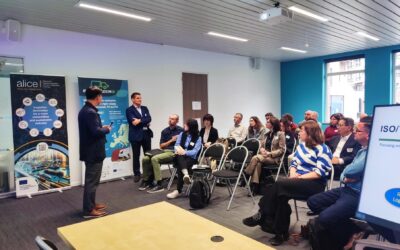
Key takeaways from the International Expert workshop
An international expert workshop gathered researchers, industry stakeholders and standardisation experts to explore how innovation pilots and emerging logistics solutions can scale into interoperable Physical Internet systems supporting efficient, collaborative and zero-emission logistics networks.

IKIGAI and partners publish white paper on book and claim
IKIGAI contributed to a Smart Freight Centre-led white paper on implementing book and claim for low-emission road freight. With input from P&G, Normec Verifavia and GRUBER Logistics, it provides a verified, standardised framework enabling credible, scalable emissions reporting.

Project coordinator
ikigai@fitconsulting.it

This project has received funding from the European Union’s Horizon Europe research and innovation programme under grant agreement No 101202912. Views and opinions expressed are however those of the author(s) and do not necessarily reflect those of the European Union or the granting authority. Neither the European Union nor the granting authority can be held responsible